
Key Takeaways
Living in Spicewood, TX means trading the density of typical Austin suburbs for Hill Country space, Lake Travis access, and a noticeably slower daily rhythm.
- Spicewood sits roughly 30 to 35 miles west of downtown Austin along Highway 71, with most of the area zoned to highly rated Lake Travis ISD.
- Lake Travis stretches more than 60 miles, giving residents direct access to boating, paddling, fishing, and lakeside recreation within minutes of home.
- Housing skews toward larger lots, custom builds, and gated communities, with new construction increasingly part of the mix at premium price points.
- The area’s appeal is lifestyle-led: wineries, parks, golf, and quieter rhythms, balanced by a 35 to 45 minute drive to central Austin.
If you want a Hill Country setting without giving up access to Austin’s economy, Spicewood deserves a serious look in 2026.
Spicewood, Texas occupies a particular sweet spot on the Austin map: far enough west to feel like real Hill Country, close enough to keep work, schools, and the airport within reach. For buyers researching a quieter, more scenic alternative to Austin’s denser suburbs, living in Spicewood usually means trading sidewalks and master-planned uniformity for ranch land, limestone bluffs, and direct proximity to Lake Travis.
According to Community Impact’s coverage of recent U.S. Census Bureau estimates, the Austin-Round Rock metro area added more than 58,000 residents between 2023 and 2024 and now sits at over 2.5 million people, and a meaningful share of that growth is pushing west into communities like Spicewood. If you’re weighing what living in Spicewood, TX actually looks like compared to other Austin-area options, new construction options across the Austin metro include both denser suburban communities and lifestyle-driven Hill Country alternatives like this one.
This guide walks through what it actually feels like to live here in 2026: the location and pace, the day-to-day lifestyle, the housing stock, the commute, and why buyers are increasingly choosing this stretch of the Hill Country.
Where is Spicewood and What is the Vibe?
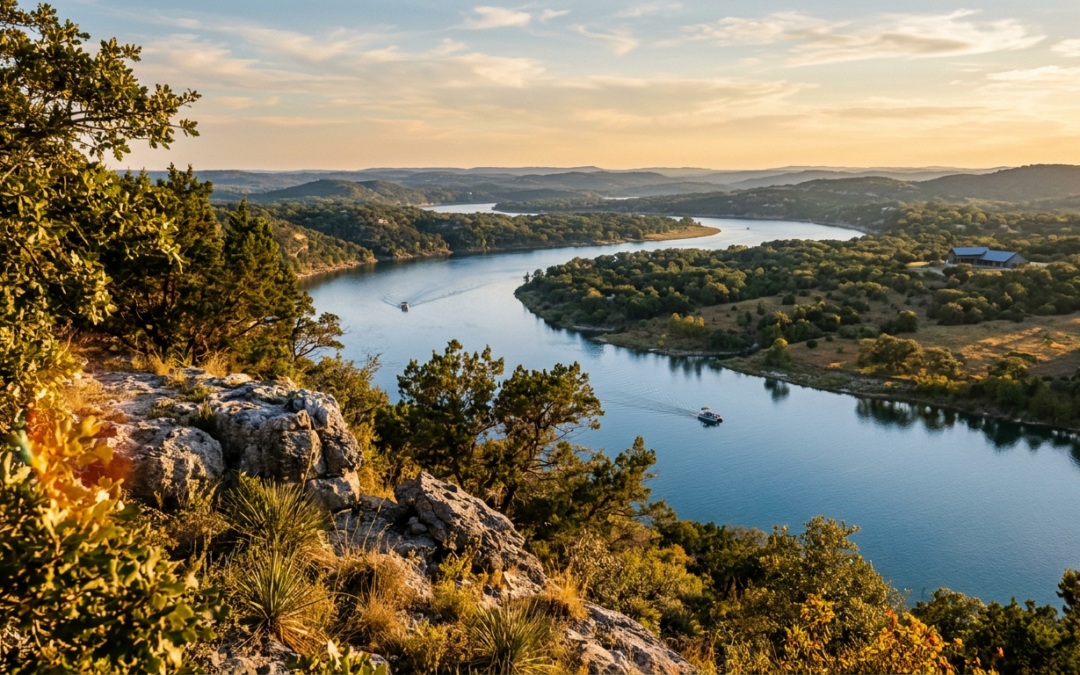
Spicewood is an unincorporated community spread across parts of Burnet, Travis, and Blanco counties, anchored along State Highway 71 west of Bee Cave and east of Marble Falls. The setting is classic Texas Hill Country: rolling limestone, native oaks, cedar-lined ranch roads, and elevated views that open up dramatically as you drive west out of the Austin basin.
A Quieter Pace Than Most Austin Suburbs
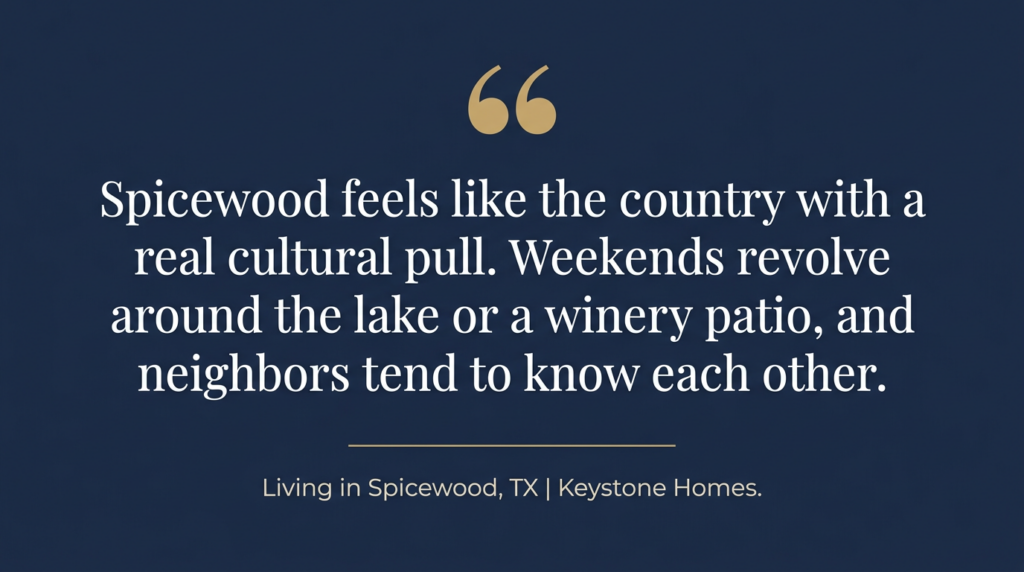
The defining quality of Spicewood is what it isn’t. There’s no walkable downtown grid, no big-box retail spine, no master-planned uniformity stretching for miles. Most of the area is low-density, with subdivisions tucked between ranches and stands of cedar. Homes here generally sit on more land than the equivalent property in a typical Austin suburb, and many subdivisions emphasize gated entries, larger lots, and views over tight street grids. Spicewood feels like the country with a real cultural pull. It’s the kind of place where Willie Nelson recorded albums, where weekends revolve around the lake or a winery patio, and where neighbors tend to know each other.
Lake Travis Sits at the Center of Everything
You cannot understand Spicewood without understanding the lake. According to Wikipedia’s reference profile of Lake Travis, the reservoir covers roughly 30 square miles of surface area and stretches about 65 miles from Mansfield Dam upriver through Travis County into southern Burnet County, with several of the most-used public access points sitting inside or right next to Spicewood. Pace Bend Park, a 1,368-acre Travis County park just off Highway 71, offers two boat ramps, more than nine miles of Lake Travis shoreline, and 20 coves and inlets. For a community of this size, that level of public lake access is unusual.
What is the Lifestyle Like in Spicewood?
The Spicewood lifestyle is shaped by water, wine country, and outdoor space. It tends to attract buyers who want nature on their doorstep without giving up sophisticated dining and recreation.
Outdoor Recreation Year-Round
Beyond the lake, Spicewood has built a reputation as one of the Hill Country’s better outdoor destinations. According to the Krause Springs official site, the property was founded in 1955 and is listed on the National Registry of Historical Sites, sitting on 115 acres with 32 springs that feed both a manmade pool and a natural pool flowing into Lake Travis. It’s the kind of place locals take for granted and visitors talk about for years. Cypress Valley Canopy Tours offers ziplining through old-growth cypress trees, and several state and county parks within a short drive provide hiking, mountain biking, and equestrian trails along the Pedernales River and broader Hill Country corridor.
Wine Country, Without the Drive
The Texas Hill Country has quietly become one of the country’s more interesting wine regions, and Spicewood sits inside it. Local vineyards like Spicewood Vineyards and Stone House Vineyard offer tastings within town, and within a 30-minute drive you can reach several more along the broader Hill Country wine trail. For residents, that means weekend plans rarely require a long drive: a tasting room, a lake cove, or a hiking trail is usually within 15 minutes of the front door.

Dining and Local Character
Spicewood has held onto its small-town personality even as the surrounding area has grown. Local favorites include Opie’s Barbecue and a handful of independently owned restaurants that have built loyal followings. For buyers used to suburban chain density, this can feel like a real shift, but the lighter retail footprint is part of the draw rather than a drawback for most people choosing the area.
What is Housing Like in Spicewood TX?
Spicewood Texas homes don’t fit a single profile. The area spans original Hill Country cottages, custom estates on multi-acre lots, gated golf communities like Barton Creek Lakeside, and newer subdivisions emphasizing larger floor plans and lake or hill views. The common thread is space: lot sizes here generally exceed what you’d find in most Austin-area suburbs, and many properties feature acreage, mature trees, or panoramic views.
For buyers used to tighter suburban lots, the trade-off is real. You get more land and more privacy, but you also take on the realities of well water in some areas, septic systems in others, and the natural maintenance of larger properties. Most newer subdivisions are on community water systems, so this varies meaningfully by location.
Schools and Districts
School district matters here. Spicewood is split primarily between Lake Travis ISD and Marble Falls ISD, with the boundary depending on exactly where a property sits. Lake Travis ISD continues to perform at the top of the Texas accountability rankings. According to Community Impact reporting on the 2024-25 Texas Education Agency A-F accountability ratings, Lake Travis ISD received an “A” rating with 90 out of 100 possible points, with seven of the district’s eleven schools earning their own “A” ratings. For families relocating to Spicewood, school zone is one of the first details worth confirming on any specific listing.
A Snapshot of What Buyers Get
| Spicewood Feature | What It Looks Like in Practice |
|---|---|
| Lot sizes | Frequently a half-acre or more, often 1+ acres in custom areas |
| Home types | Custom estates, gated communities, ranch-style, modern Hill Country, new construction |
| School districts | Primarily Lake Travis ISD, with portions in Marble Falls ISD |
| Lake Travis access | Multiple public ramps, parks, and lakefront subdivisions within 5 to 15 minutes |
| Pace of life | Quieter, lower density, more land per home than typical Austin suburbs |
| Drive to downtown Austin | Roughly 35 to 45 minutes via Highway 71, traffic dependent |
How is the Commute from Spicewood to Austin?
Highway 71 is the spine of the Spicewood commute. From the Travis County side of Spicewood, downtown Austin is generally a 35 to 45 minute drive depending on time of day, with the worst congestion typically clearing once you get west of Bee Cave and the Hill Country Galleria. For employees working in West Austin, Bee Cave, or the 360 / MoPac corridor, the commute is often noticeably easier than what suburbs north of the city deal with on I-35.
What Slows the Commute Down
Highway 71 narrows in places and is the only major east-west route, so accidents or weather events can stack traffic quickly. For buyers seriously considering moving to Spicewood, TX, driving the route at the actual times you’d commute, ideally on a weekday morning, is the single best piece of due diligence you can do before making an offer.
Why Buyers Still Choose This Trade-Off
The honest pitch is this: you trade a longer commute for materially more space, much better scenery, and a fundamentally different daily pace. For remote and hybrid workers, that math has shifted considerably in Spicewood’s favor since 2020. According to Austin Monitor reporting on regional growth projections, the Austin metro area is projected to more than double in size by 2060, adding 1.3 million residents at the current growth rate, and much of that growth is pushing into the kinds of edge-of-metro communities that Spicewood represents.
Why are Buyers Moving to Spicewood, TX?
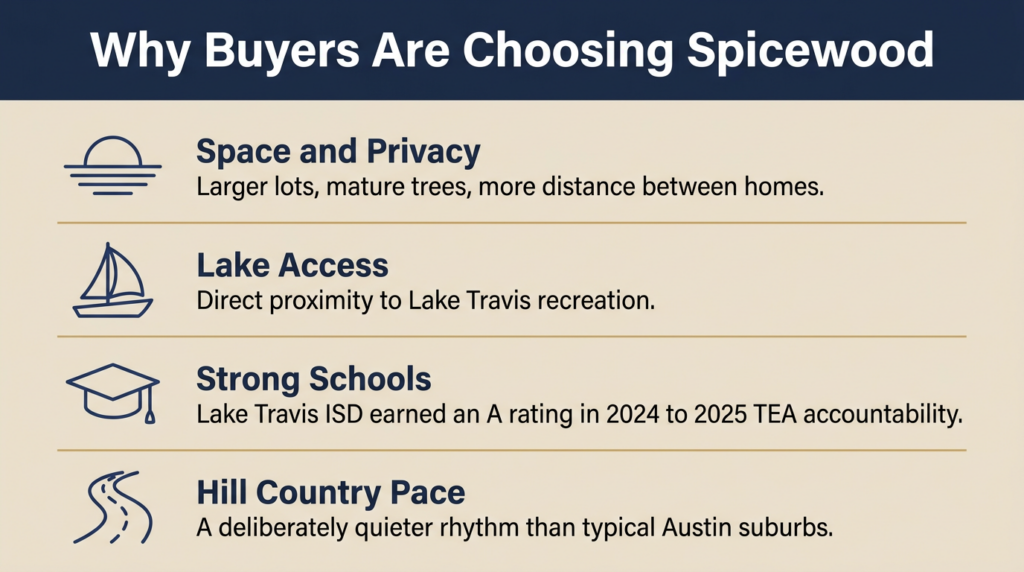
Talk to people who have moved to Spicewood TX recently and a few themes come up consistently. These are the reasons the area keeps showing up on shortlists for buyers researching Austin-area alternatives:
- Space and privacy. Larger lots, mature trees, and meaningful distance between homes are increasingly hard to find at any price point closer to Austin.
- Lake and Hill Country access without leaving home. The lake isn’t a weekend trip. It’s part of the neighborhood.
- Strong schools. Lake Travis ISD’s continued “A” rating is a major factor for families.
- A different pace. Buyers describe Spicewood less as a suburb and more as a deliberate lifestyle choice.
The Austin metro is also rebalancing in ways that benefit areas like Spicewood. As the urban core has densified and prices in inner suburbs have climbed, buyers who want square footage, land, and views are looking further out, especially when they have flexibility on commute days.
What is the New Construction Market Like in Spicewood?
Spicewood has historically been dominated by custom builds and resale of older estates. That picture is shifting. Newer subdivisions are introducing thoughtfully designed, gated communities with floor plans that match how today’s buyers actually live: open layouts, larger primary suites, dedicated home offices, and outdoor living designed around the views the Hill Country gives you for free.
For buyers focused on homes near Lake Travis, new construction has become an increasingly compelling entry point. It avoids the deferred maintenance that comes with older Hill Country homes, offers modern energy efficiency, and lets buyers customize finishes without committing to the longer timeline of a fully custom build. It also tends to come with cleaner warranties and known floor plans, which matters when you’re relocating and don’t have time for surprises. For a side-by-side look at the communities currently being built around Austin, comparing locations and floor plans is usually the fastest way to narrow choices.
Frequently Asked Questions About Living in Spicewood, TX
Is Spicewood TX a good place to live?
For buyers who prioritize space, scenery, lake access, and a quieter pace, Spicewood is one of the strongest options in the Austin metro. The trade-off is a longer commute to central Austin and lower retail density than typical suburbs.
How far is Spicewood from downtown Austin?
Spicewood sits roughly 30 to 35 miles west of downtown Austin via Highway 71, generally a 35 to 45 minute drive depending on traffic and exact location.
What school district serves Spicewood?
Most of Spicewood is served by Lake Travis ISD, which earned an “A” rating in the Texas Education Agency’s 2024-25 accountability ratings. Some portions fall within Marble Falls ISD. School zoning varies by address, so confirm on any specific property.
What are homes near Lake Travis like?
Homes near Lake Travis in the Spicewood area range from custom estates on multi-acre lots to gated communities, golf-course homes, and newer construction. Lot sizes are typically larger than in most Austin suburbs, and many properties offer lake or Hill Country views.
What outdoor activities are nearby?
Pace Bend Park offers more than nine miles of Lake Travis shoreline, multiple boat ramps, hiking trails, and camping. Krause Springs, a 115-acre property listed on the National Registry of Historical Sites, features natural springs, swimming areas, and camping. Wineries, golf courses, and zipline tours round out the local options.
Ready to Explore Spicewood for Yourself?
Spicewood rewards buyers who do their homework. Drive the area at different times of day, visit the parks, stop at a winery, and pay attention to how the pace of life feels compared to wherever you’re living now. For most people who choose to live here, the decision isn’t just about buying a house. It’s about what their weekends, their views, and their everyday routines will look like for the next decade.
If you’re considering new construction homes near Lake Travis, Keystone Homes builds in Spicewood at Brahmans Draw, a gated Hill Country community designed around craftsmanship and the quieter lifestyle that defines this part of the Austin metro. To learn more about available floor plans or schedule a visit, get in touch with the Keystone team.